
Extracellular and sarcomeric alterations in Marfan syndrome - Cristina-Maria Șulea PhD-védése, 2026. feb. 16. 14:00
2026. február 6

PhD candidate: Cristina-Maria Șulea MD
Title of doctoral dissertation: Extracellular and sarcomeric alterations in Marfan syndrome: insights from aortic fibrillin-1 and myocardial titin investigations
Location and time of defence: Beznák Aladár Lecture Hall, Basic Medical Science Center, Semmelweis University, 16th February 2026 at 2PM
Supervisors: Prof. Miklós Kellermayer, DSc (Department of Biophysics and Radiation Biology) and Prof. Zoltán Szabolcs PhD (Semmelweis University Heart and Vascular Center)
Abstract: Although a rare disease, Marfan syndrome is known due to its dramatic impact on the aorta, yet the molecular event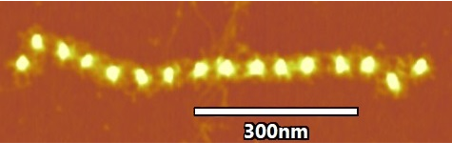 s that progressively weaken aortic tissue remain only partially understood. Central to the disease is fibrillin-1, a key structural component of the extracellular matrix, whose disruption compromises the ability of the aortic wall to withstand mechanical stress. Increasing evidence suggests that these extracellular abnormalities may also extend to the myocardium, raising the possibility that Marfan syndrome involves not only the vessel wall but a more global disturbance of cardiovascular mechanics.
s that progressively weaken aortic tissue remain only partially understood. Central to the disease is fibrillin-1, a key structural component of the extracellular matrix, whose disruption compromises the ability of the aortic wall to withstand mechanical stress. Increasing evidence suggests that these extracellular abnormalities may also extend to the myocardium, raising the possibility that Marfan syndrome involves not only the vessel wall but a more global disturbance of cardiovascular mechanics.
This dissertation examines how pathogenic variants in the FBN1 gene reshape the nanoscale architecture and mechanical behavior of human aortic tissue. Using atomic force microscopy-based morphological analysis and mechanical testing of individual fibrillin-1 microfibrils isolated from the aortic wall, the study reveals subtle yet significant mechanical fragility in Marfan samples. In parallel, it explores how the myocardium responds to the altered mechanical environment, identifying changes in the expression of titin isoforms that may represent an adaptive mechanism to preserve cardiac function. Together, these findings provide a molecular-level perspective on how genetic alterations translate into mechanical vulnerability and compensatory remodeling across the cardiovascular system, offering new insights into the pathomechanisms of Marfan syndrome.
Tézisfüzet és további információ ITT.
A sikeres védéshez szeretettel gratulálunk!
.jpg)